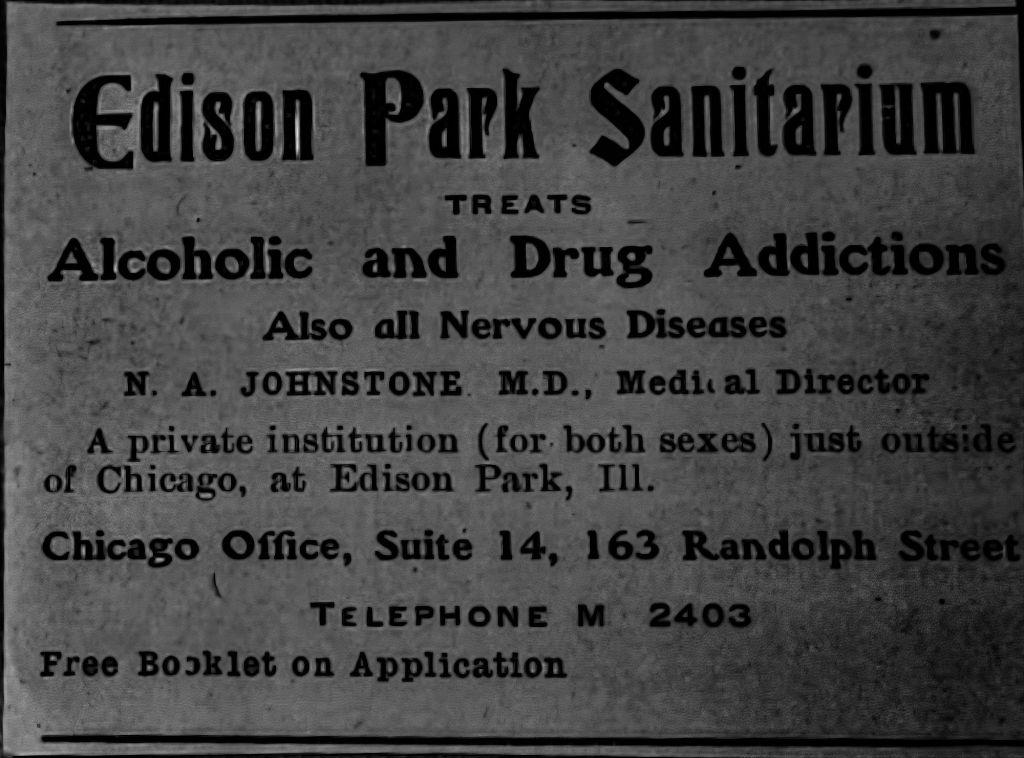
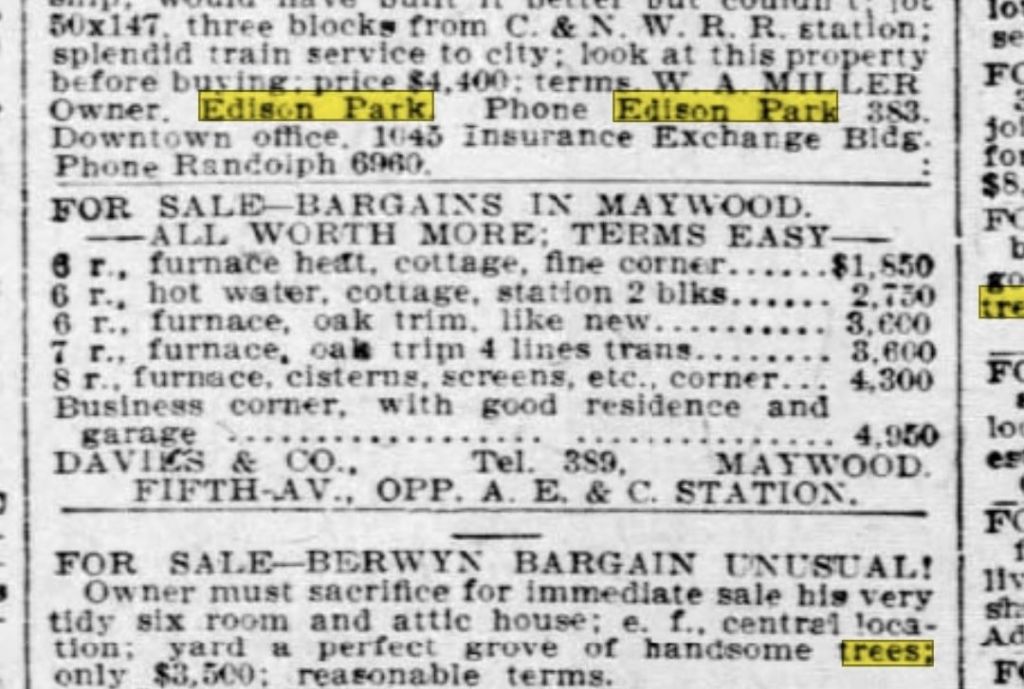
Streets were once lined with fruit trees and evergreens that sat in front of lots and houses that sold for a few thousand dollars. In the year 1912, a bungalow sold for $4,400. It was the first electrified area of the Chicagoland area. They even had the first streetlights in the area. Edison Park had been a relatively young town that was annexed by Chicago just a few years prior. But amid those happy homes sat a building that temporarily housed people who were alcoholics or drug addicts who wanted to be free from the addiction.
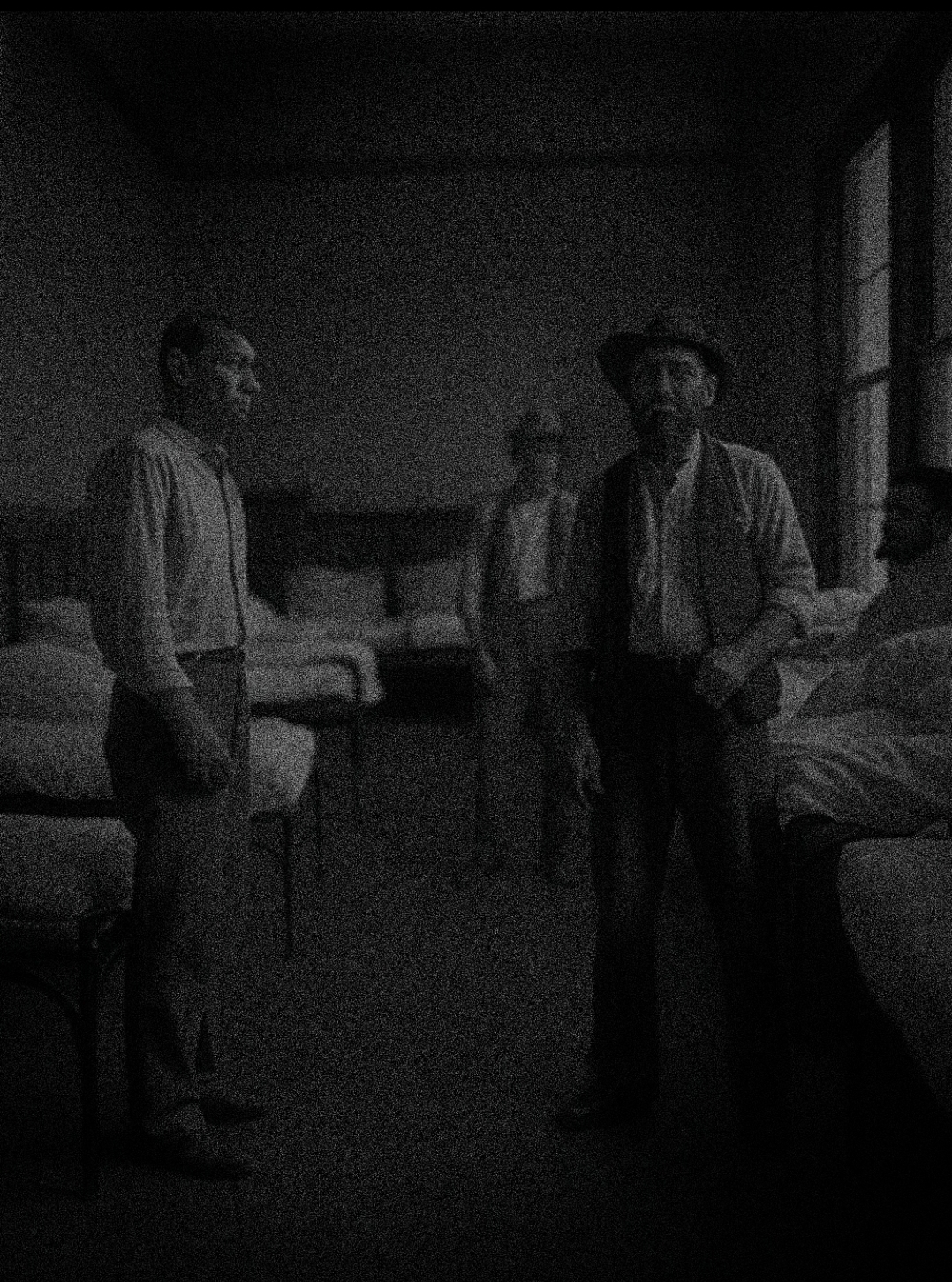
The Edison Park Sanitarium was filled with vagabonds, drunks, and drug addicts, whose lifestyles were marked by criminality. The hard wooden floors smelled of varnish, cleaning supplies, and whatever sickness flew from the bodies of the people who stayed there. Some men were committed to the facility. Some of them had the shakes from withdrawals. A lot of people had died in their beds while trying to overcome the disease, since medicine wasn’t that advanced at the time. Most of the mortality occurred in severe cases, while the mild cases typically recovered.
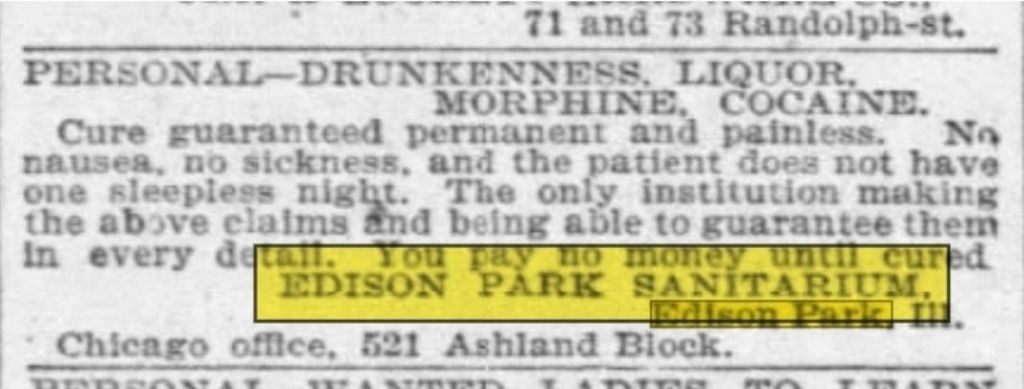
The sanitarium offered a cure to these addictions free of charge, but if the patient survived and were able to move on with their life, they would then be charged. Medical facilities at the time were sometimes quite harsh. People believed that if they wanted to improve, they would have to endure the type of punishment that involved dealing with the staff.
Heroin and morphine addicts seem to have more unpleasant withdrawals than alcoholics. A lot of the people in the Edison facility were drug addicts, among alcoholics. Morphine and heroin users would vomit and defecate on themselves, with uncontrollable diarrhea. The facility smelled terrible, which made the staff resent the place and having to deal with addicts. It was a harsh environment marked by frequent brawls and arguments with the staff. Everyone was chain-smoking at their bedside while dreaming about how to either get their next fix or become healthy.
Married men would have sex with the widowed drunk women who were in the facility. Some women made their rounds with men, stirring up jealousy, which resulted in a lot of bloodshed and bad vibes that the staff tried to keep under control. Some relationships lasted for a while outside of the facility, but the time inside the joint was something they would never forget.
A majority of the people were advised to go to the facility. Their minds were there, but their hearts were still in need of the drunken state. They were cured upon their release, but many flew back into their bad habits even harder. Wife beaters, guys who couldn’t keep a job, suicidal folks, widows who tried to drink away their sorrows, any many others were part of this facility, along with criminals of sorts.
This group of people, some looking for help, others were there from suggestion. They all adapted to their habitat, while some contributed to the creation of the environment more than others did. Some alcoholic women would piss on themselves all the time. Other guys made the place smell like a cross between diarrhea, puke, and sweat. The staff hated being there as much as the patients did, turning the place into a type of prison with rules that made no sense.
Some of these people considered the time they had there as a dark moment in their lives, serving as a conduit into a new life plan, while others became so resentful that they couldn’t wait to return to street life, leaving madder than when they came in. With the start of Alcoholics Anonymous and other similar programs, fewer people attended the facility, the line dwindled. It eventually closed sometime in the mid-20th century. The place just shut. Doors locked. Stories stayed. Edison Park remains still a very nice neighborhood that once held this facility.
 The Essence of Chicagoland Areas