I was looking up this neighborhood for a couple days. Initially I was looking into John Ton and the underground railroad. I had no idea that the underground railroad was once in the area. There’s 178 neighborhoods in Chicago and I’m sure there’s something really cool in every single neighborhood. Roseland is actually a community area; a larger neighborhood with little neighborhoods inside. So I Doug into historical documents for hours reading tons of articles and shifting through articles that seemed even have relevant until I moved on to the next one. As always I make sketches until something more tangible comes along, and I created the Roseland video with a big focus on John ton. Before uploading I did more research and discovered an article that talked about the tone family being in Calumet park. I was so pissed. Now I had to shift neighborhoods or just give up on the whole idea. This was around midnight. I don’t like screwing up my sleep schedule. I rather wake up and start working at 4:00 in the morning then staying up all night until 4:00 in the morning. The first thing out of bed I did was research more and I discovered that John was in the area initially. Then I found old 19th century articles about Cornelius Kuyper, who was another Dutch immigrant who participated in the freedom of black slaves at the time.
When the Dutch first came, they couldn’t speak English so they got a translator to show them around. They bought highland area between 107th and 111th from Michigan Avenue and west for $5 an acre. Then after that they bought another 80 acres north of that which was split up between a some few Dutchmen including Kuyper. They had ox bring lumber from Chicago to build the houses, the progress was slow. A. de Kake was the carpenter in the group leading the team. They weren’t able to find other Carpenters to work, so the Dutch immigrants built their own houses with the help of de Kake. And once they build their houses they needed work so they employed their selves as farmers and got to work on the soil. They used oxen to plow and make things happen. Josh Billings said “he who by the plow would thrive, must no two-forty hosses drive, but worry the ground to and fro, with horned critters that skasely seem to go”.
The Roseland Dutch immigrants did thrive with their markets by doing gardening, stock raising, and dairy farms. The men from Holland worked very hard to create this neighborhood and then the produce from it.
At the time, Chicago was described as a straggling village. Not far from them was blue Island that held only a few houses. There was a couple houses in South Englewood at the time. Riverdale had a few houses and now High Prairie which was later called Roseland had only a few houses in the 1850s.
They hunted a lot of goose and duck and pigeon. In Spring and fall, the skies would still fill with fowl creating dark skies for many hours. This was a typical site throughout early America. Infrastructure housing and streets and parking lots killed most of the wildlife habitation and currently the skies are mostly clear of many birds like they had a couple hundred years ago. It would make pigeon soup and other dishes from the birds. They would utilize the feathers for various things. It was hard to live in Chicago at the time because the wages were anywhere from 30 cents to a dollar a day, so a lot of these Dutchman turned to the farms and hunting. Life and transportation wasn’t very easy back then so a lot of young people took social rides two-headed pathway to Chicago behind a yoke of oxen.
Life was hard for the dutchman. But they’re consistent prevalence soon push them out of their hardships and they eventually open the store. Kuyper open the first store in roseland. He opened it in his house. Part of his house was the first store. It was open between 1850 and 1854. By the time more Dutch immigrants came to the area in 1856, the area of what we now know is Roseland have been doing quite decently.
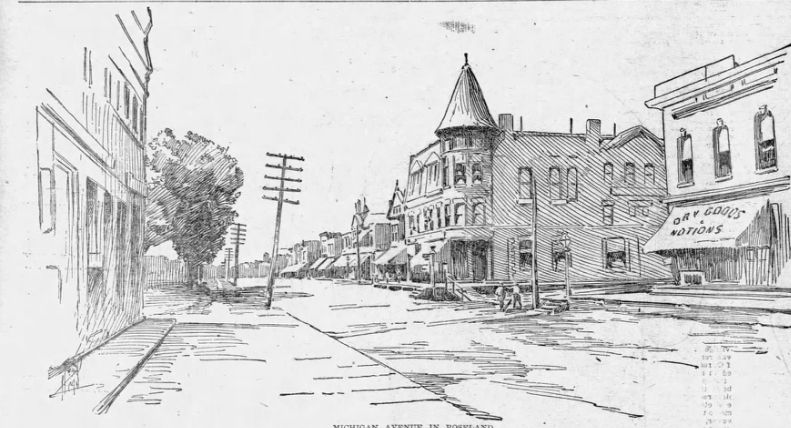
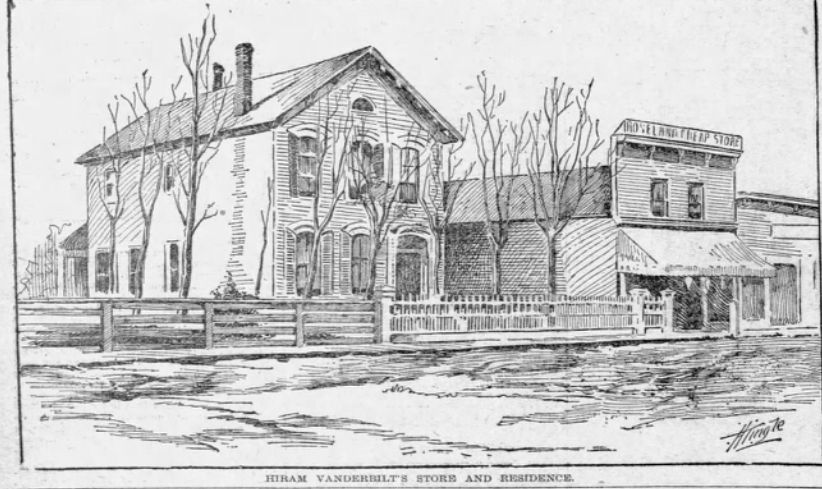
N Dalenberg and Cornella Gouwen were the first people of the neighborhood to get married. George de Young what’s the first child born in the area now known as roseland. George Dion didn’t live very long so he was also the first death and buried of the roseland community. There wasn’t a lot of people in the beginning. The first church had only 18 members. The women set and chairs of the church and the men sit on benches.
110th Street was the first mercantile business from a Chicago man who helped Kuyper run the business, which became a general store there on 110th Street which was then called Thornton street. Things started to happen in the Rose land area. They moved the post office from Calumet to the Roseland community and called it the Hope post office. And on 107th Street, the first school opened up in the back of the church. Peter de Young was the teacher there. They taught Dutch mannerisms, principles, and studies. But some time in the 1850s about 5 years after the other school began, the community decided to send the children to Gardner School to learn English and to learn in the English language. Gardner School was a log house.
Georgia Vandersyde and John Ton made the first map plat of the area. The values of the building started to rise and Chicago then annexed Roseland in the year 1890.
John Ton, Kuyper, and others participated in the underground railroad. They were somewhat successful people at the time. They were some of the first people to live in the Roseland area and part of the people that made the neighborhood to what it became. They shared some of her their success by helping the slaves find freedom and be safe from the hunters whose ambition sprang for a reward to capture runaway slaves.
J. Ton had hundreds of descendants that would have annual meetings and family reunions well into the 20th century. Some of the histories stayed with the family, but most of the stories have disappeared with those family members.
This is only a fraction of the history of the Roseland neighborhood in Chicago.

 The Essence of Chicagoland Areas