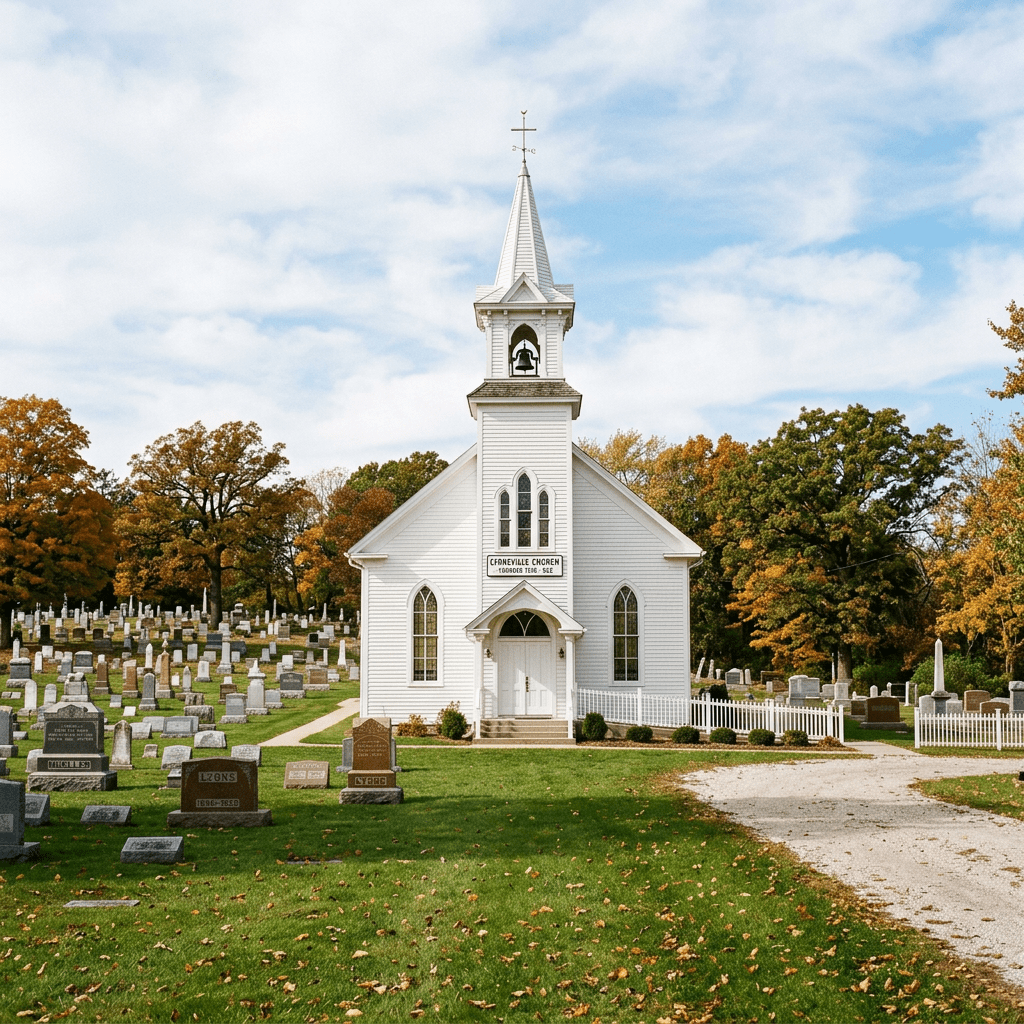
The Lyonsville Congregational Church, located at Joliet and Wolf Roads in what is now Indian Head Park, Illinois, is the oldest Congregational church in Cook County. Originally founded in 1843 as the Congregational Church of Flagg Creek by 18 pioneer families, it was later renamed Lyonsville when the local post office changed its name.
In its earliest days, before any dedicated building existed, the congregation met in private homes of its members. Local tradition holds that one of those homes belonged to Deacon Rufus Brown, whose house served as a stop on the Underground Railroad. Freedom seekers (escaped enslaved people) were reportedly sheltered in Brown’s home near the church during the Civil War era. Because helping freedom seekers was illegal under the Fugitive Slave laws, these activities were kept secret, which is why much of the history survives as local lore passed down through families and the Flagg Creek Heritage Society.
The church’s first dedicated building was a log schoolhouse — the very first public school in the township — built on the opposite side of Joliet Road from the current church location. The congregation used this log schoolhouse for worship services for about 16 years. A single Scottish immigrant woman named Mary (May) McNaughton served as the first teacher in that log schoolhouse. Local historians still highlight how remarkable it was for a single woman in the 1840s frontier to take on such a visible public role. The schoolhouse effectively became the first “log-cabin church.” Mary McNaughton later married into the Vial family, further tying her into the founding community.
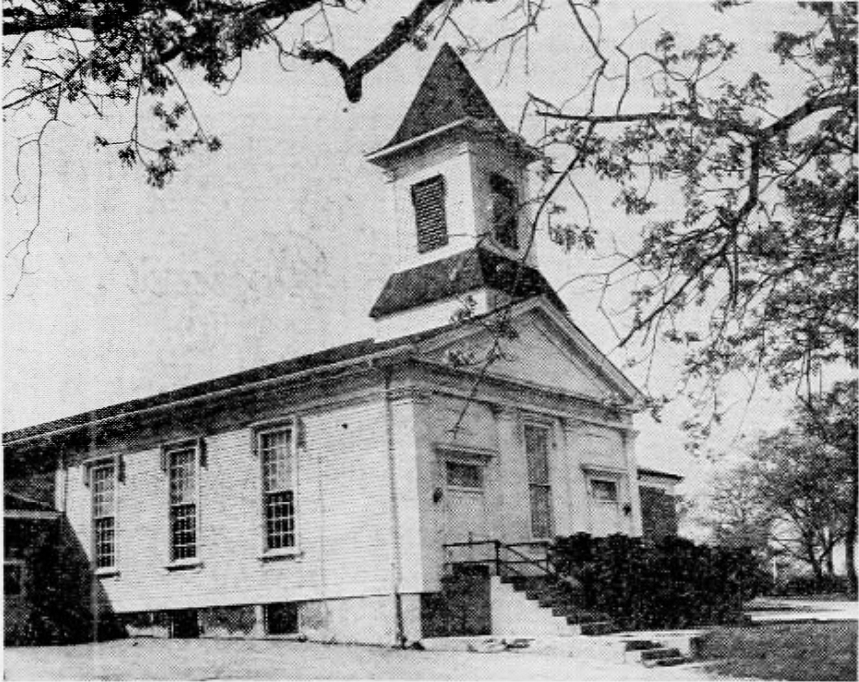
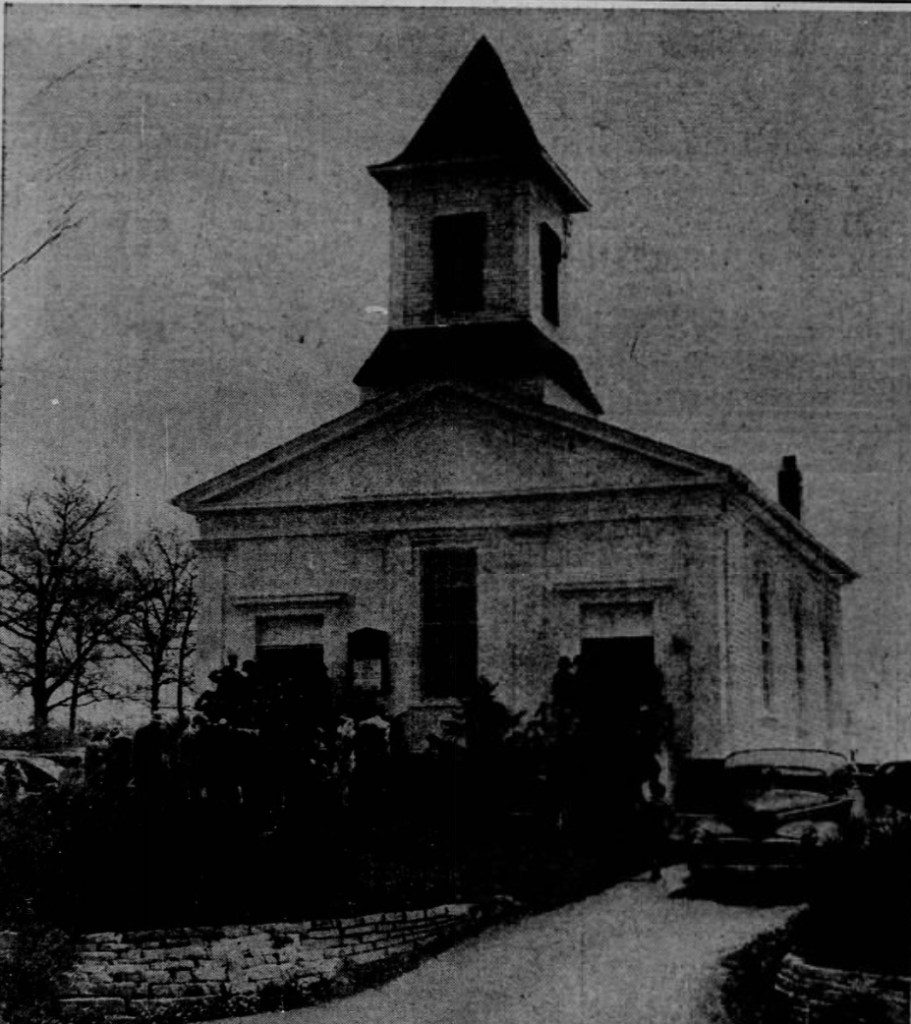
In 1858, the congregation erected a wooden chapel at the present location (southeast corner of Joliet and Wolf Roads) for approximately $1,800. The building features classic New England meetinghouse architecture and has remained in continuous service ever since, with various repairs and improvements over the decades.
During the Civil War, the 1858 church building served as a recruiting station for Union Army volunteers. Many local men from the congregation enlisted there.
The Pioneer Families
A 1943 newspaper article marking the church’s centennial highlights several key founding families:
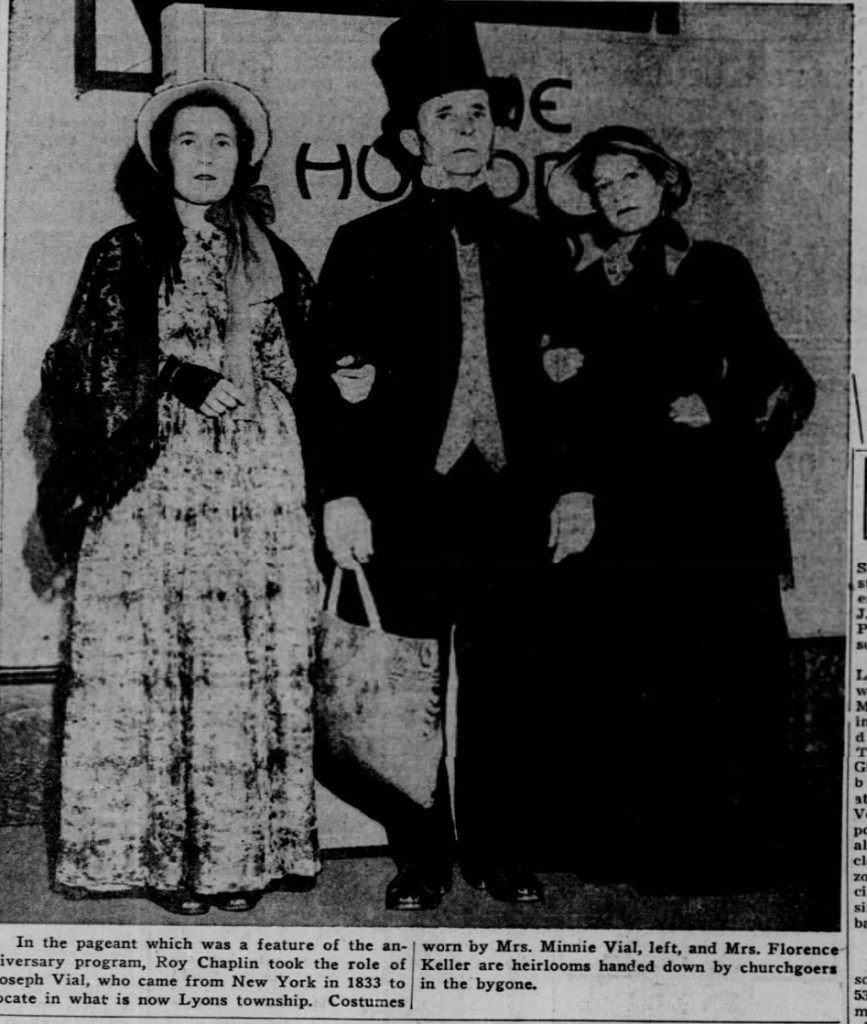
- The Vial (sometimes spelled Bial) family: Joseph Vial arrived in the community in 1833 when there were only two houses in Lyons Township. Robert Vial, a charter member, lived in the neighborhood for 87 years and died in 1921 at age 97. R.C. Vial and his sister lived next door to each other on the original Vial homestead.
- The Craigmile family: More than fifty Craigmiles have been members over the years. When they arrived in 1843, they brought letters of transfer directly from a church in Scotland. Descendants Esther Craigmile and Edna Craigmile lived in Western Springs.
- Other early families mentioned include Carrington, Cook, Ward, Derland (or Darling), Evans, Grover, and Polk.
Before the Burlington Railroad was built, Lyonsville was poised to become the main trading center for Lyons Township. Stagecoaches ran along Plainfield Road and Joliet Road, and the area functioned as a church and school hub in the open prairie landscape.
Landscape and Setting
The area that became Indian Head Park was originally tallgrass prairie. It was later converted to farmland. All the trees visible today — including those around the church at Joliet and Wolf — are not original. They were either planted by residents over the last 100+ years or are invasive species that moved in after the prairie was settled. In 1943, the church stood as a picturesque wooden landmark in Flagg Creek Valley, about 17 miles southwest of Chicago’s Loop, almost completely surrounded by golf greens of the Flagg Creek Golf Course.
Connection to Western Springs
The Lyonsville church also played a key role in founding another congregation. Reverend J.C. Armstrong of Lyonsville began holding Sunday afternoon preaching services in a schoolhouse on Chestnut Street in Western Springs. This led to the 1883 formation of the Western Springs Christian Association, the direct predecessor of the Western Springs Congregational Church. Much credit for the start of that church is given to Lyonsville and Rev. Armstrong.
The Map and Local Historian
Local historian Sharon L. Comstock, Ph.D. (author of the 2015 book Burr Ridge in Arcadia Publishing’s Images of America series) has done extensive research on Lyonsville and abolitionism in early Chicago. She serves as a Trustee of the Lyonsville Cemetery Association and works closely with the Flagg Creek Heritage Society. According to her, she has located a historical map showing the exact former location of Deacon Rufus Brown’s house. She expressed interest in further conversation after reviewing public profiles.
The church continues to stand today as a physical link to this rich pioneer, abolitionist, and community history.
 The Essence of Chicagoland Areas