The Hidden History of Lyonsville Congregational Church: Underground Railroad, Pioneer Women, and Prairie Roots in Indian Head Park

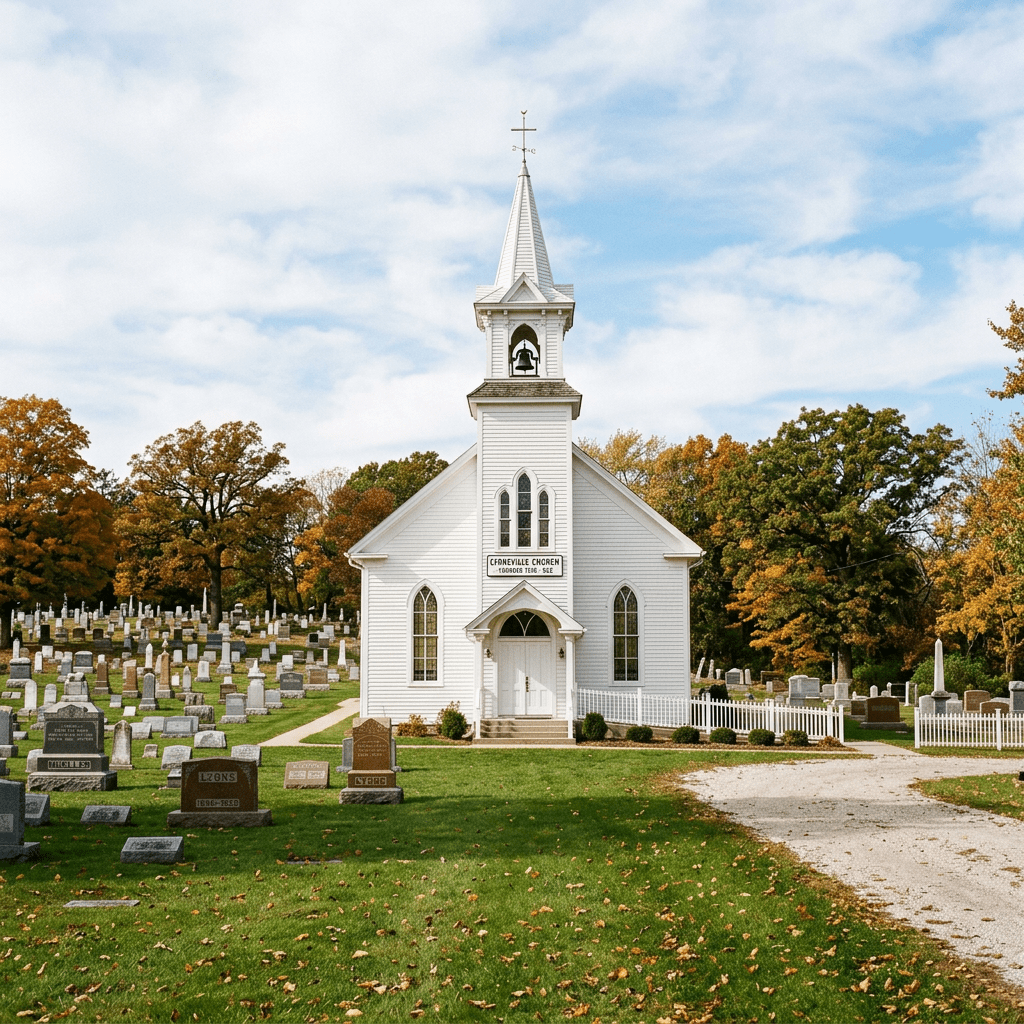
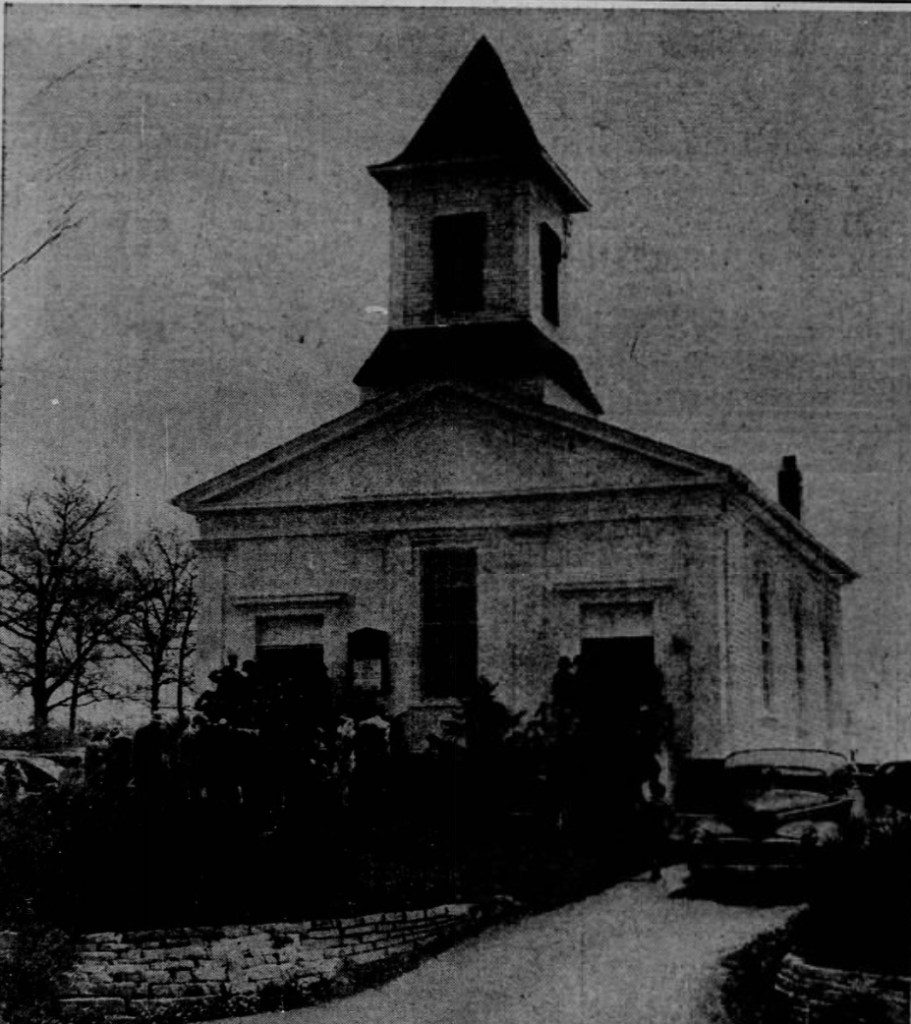
The Lyonsville Congregational Church, located at Joliet and Wolf Roads in what is now Indian Head Park, Illinois, is the oldest Congregational church in Cook County. Originally founded in 1843 as the Congregational Church of Flagg Creek by 18 pioneer families, it was later renamed Lyonsville when the local post office changed its name.

In its earliest days, before any dedicated building existed, the congregation met in private homes of its members. Local tradition holds that one of those homes belonged to Deacon Rufus Brown, whose house served as a stop on the Underground Railroad. Freedom seekers (escaped enslaved people) were reportedly sheltered in Brown’s home near the church during the Civil War era. Because helping freedom seekers was illegal under the Fugitive Slave laws, these activities were kept secret, which is why much of the history survives as local lore passed down through families and the Flagg Creek Heritage Society.

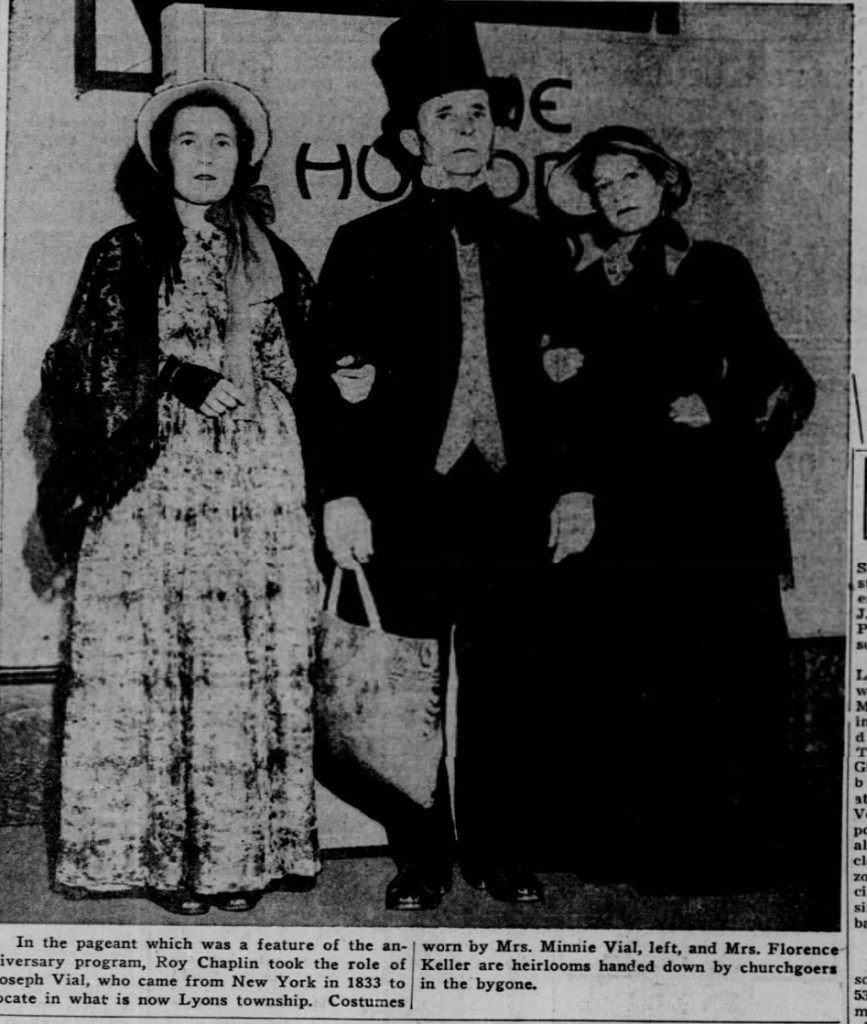
The church’s first dedicated building was a log schoolhouse — the very first public school in the township — built on the opposite side of Joliet Road from the current church location. The congregation used this log schoolhouse for worship services for about 16 years. A single Scottish immigrant woman named Mary (May) McNaughton served as the first teacher in that log schoolhouse. Local historians still highlight how remarkable it was for a single woman in the 1840s frontier to take on such a visible public role. The schoolhouse effectively became the first “log-cabin church.” Mary McNaughton later married into the Vial family, further tying her into the founding community.

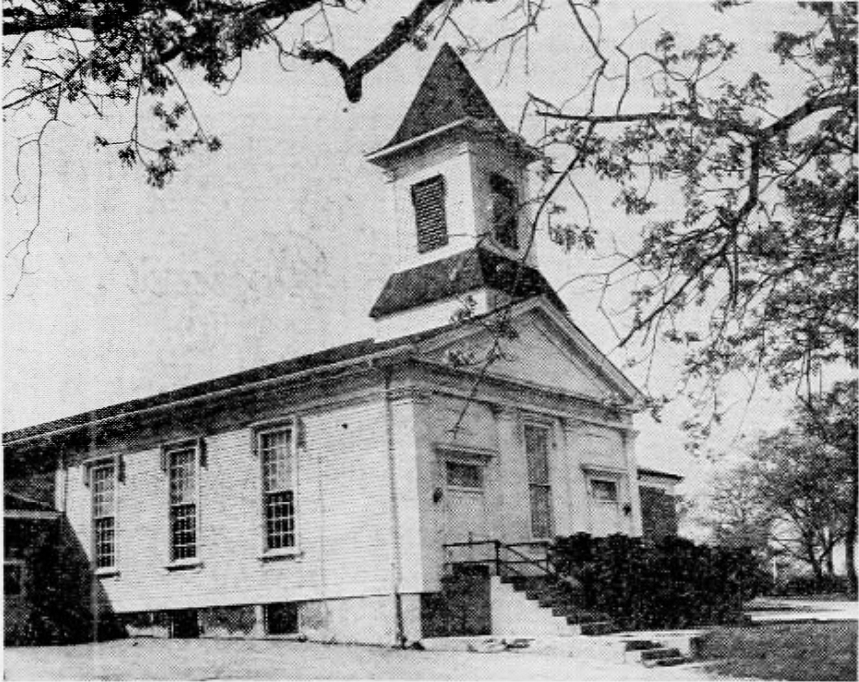
In 1858, the congregation erected a wooden chapel at the present location (southeast corner of Joliet and Wolf Roads) for approximately $1,800. The building features classic New England meetinghouse architecture and has remained in continuous service ever since, with various repairs and improvements over the decades.

During the Civil War, the 1858 church building served as a recruiting station for Union Army volunteers. Many local men from the congregation enlisted there.

The Pioneer Families

A 1943 newspaper article marking the church’s centennial highlights several key founding families:

  • The Vial (sometimes spelled Bial) family: Joseph Vial arrived in the community in 1833 when there were only two houses in Lyons Township. Robert Vial, a charter member, lived in the neighborhood for 87 years and died in 1921 at age 97. R.C. Vial and his sister lived next door to each other on the original Vial homestead.
  • The Craigmile family: More than fifty Craigmiles have been members over the years. When they arrived in 1843, they brought letters of transfer directly from a church in Scotland. Descendants Esther Craigmile and Edna Craigmile lived in Western Springs.
  • Other early families mentioned include Carrington, Cook, Ward, Derland (or Darling), Evans, Grover, and Polk.

Before the Burlington Railroad was built, Lyonsville was poised to become the main trading center for Lyons Township. Stagecoaches ran along Plainfield Road and Joliet Road, and the area functioned as a church and school hub in the open prairie landscape.

Landscape and Setting

The area that became Indian Head Park was originally tallgrass prairie. It was later converted to farmland. All the trees visible today — including those around the church at Joliet and Wolf — are not original. They were either planted by residents over the last 100+ years or are invasive species that moved in after the prairie was settled. In 1943, the church stood as a picturesque wooden landmark in Flagg Creek Valley, about 17 miles southwest of Chicago’s Loop, almost completely surrounded by golf greens of the Flagg Creek Golf Course.

Connection to Western Springs

The Lyonsville church also played a key role in founding another congregation. Reverend J.C. Armstrong of Lyonsville began holding Sunday afternoon preaching services in a schoolhouse on Chestnut Street in Western Springs. This led to the 1883 formation of the Western Springs Christian Association, the direct predecessor of the Western Springs Congregational Church. Much credit for the start of that church is given to Lyonsville and Rev. Armstrong.

The Map and Local Historian

Local historian Sharon L. Comstock, Ph.D. (author of the 2015 book Burr Ridge in Arcadia Publishing’s Images of America series) has done extensive research on Lyonsville and abolitionism in early Chicago. She serves as a Trustee of the Lyonsville Cemetery Association and works closely with the Flagg Creek Heritage Society. According to her, she has located a historical map showing the exact former location of Deacon Rufus Brown’s house. She expressed interest in further conversation after reviewing public profiles.

The church continues to stand today as a physical link to this rich pioneer, abolitionist, and community history.
From Prairie to Powerhouse: The Insane History of 79th & Halsted in Chicago

In 1843 the U.S. government sold 160 acres at the southwest corner of 79th and Halsted for just $200.
By 1912 that same corner had exploded in value — a 125-by-125-foot plot (five standard Chicago lots) sold for $155,000.
In 1918, Kraber’s Market at 7810 S. Halsted sold sugar-cured hams for 25½¢ a pound, round steaks for 26½¢, and short ribs for 17½¢. Families shopped daily at what was already a bustling South Side hub.
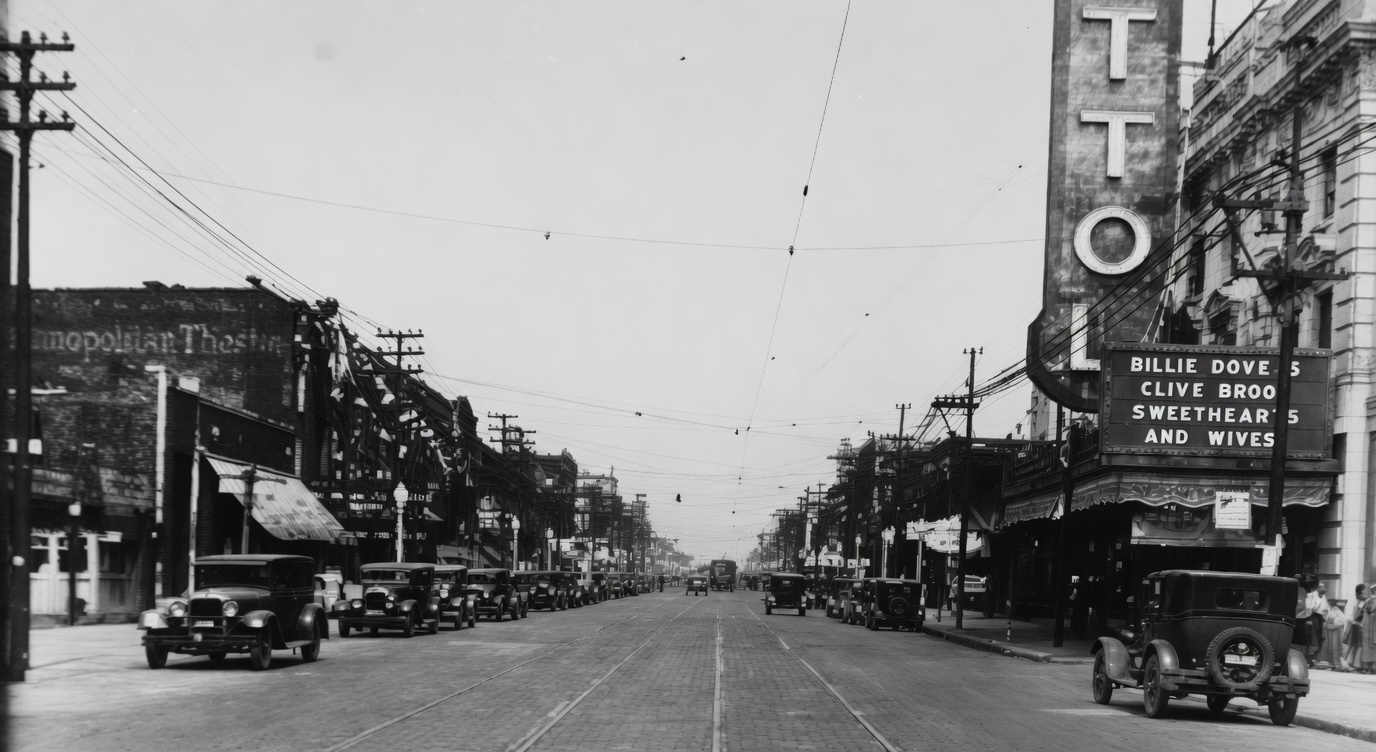
The 1920s brought the crown jewel. In 1925 the $1-million Capitol Theatre opened right on Halsted near 79th. Designed by famed architect John Eberson, it featured an atmospheric Roman-villa auditorium, starlit lobby, and giant stage. It became the entertainment heart of Auburn Park.
By 1930 the intersection saw 39,000 people daily. Corners were valued at $1 million or more. In 1931 the S. & H. department store opened a 5,000-square-foot space at the southwest corner.
Then came decline. The Capitol Theatre closed in the late 1970s and was demolished in 1985. Its site remains empty today.
Now? A single 18,445-square-foot commercial building just south of the intersection is valued between $1.8 million and $2.7 million, sitting on a corner with over 26,000 vehicles passing daily.
From $200 for 160 acres of empty prairie to millions for one modern building lot — that’s the raw, relentless story of Chicago growth at 79th and Halsted.

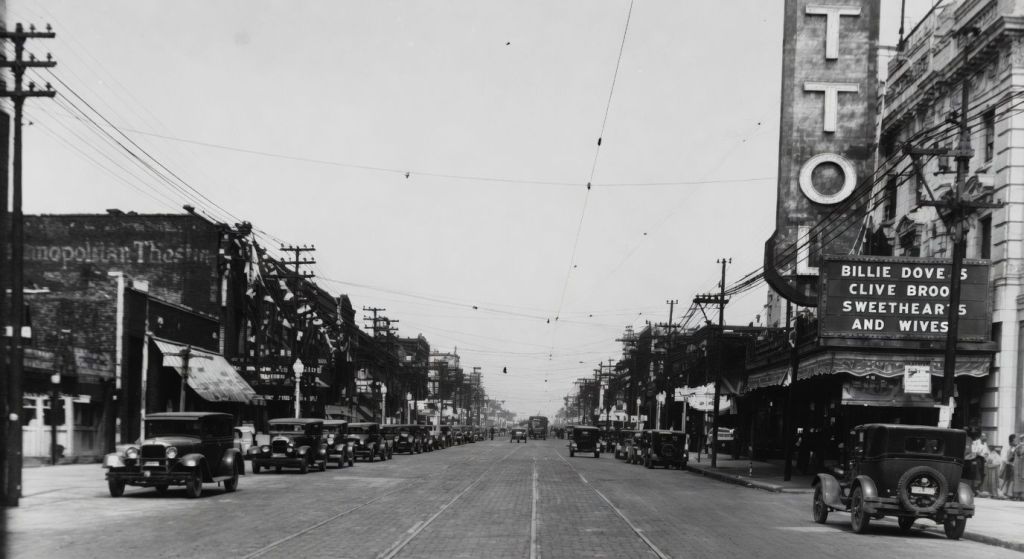
Looking north on Halsted Street at 79th in the late 1920s — the Capitol Theatre marquee visible on the right.

The Roseland Chicago Underground Railroad


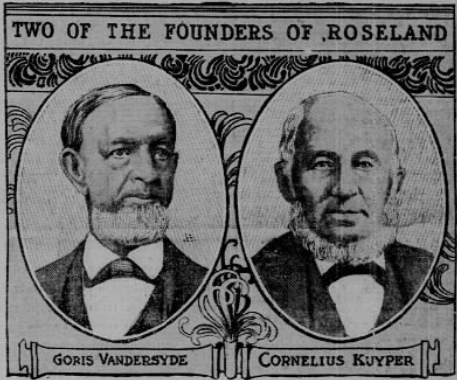
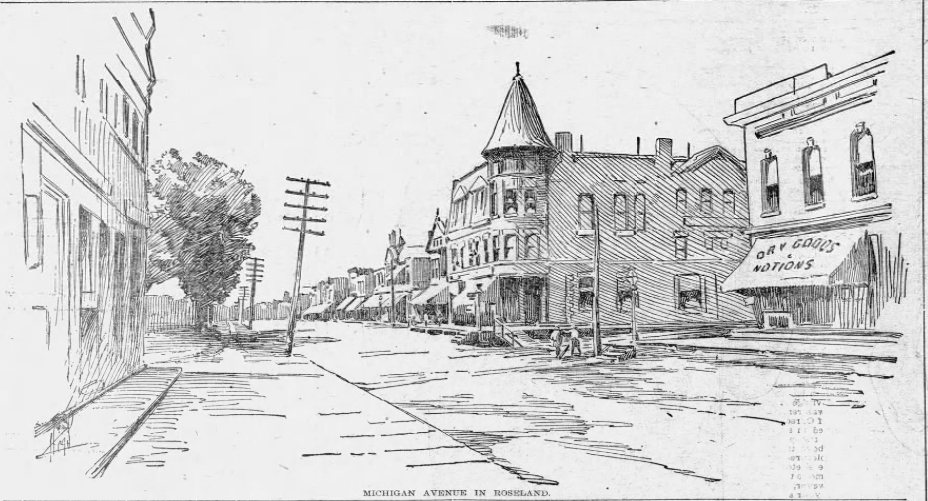
Cornelius Kuyper, John Ton, and others: The Dutch Founders of Roseland Who Helped Build Chicago’s Black History

In 1849, a small group of Dutch immigrants arrived in what is now the Roseland neighborhood on Chicago’s far South Side. Among the original nine families were two men whose stories still deserve to be remembered today: Cornelius Kuyper and John Ton.

The Early Days on High Prairie

When the Dutch settlers first arrived, the area was known as High Prairie — higher, drier land compared to the swampy “Low Prairie” along the Little Calumet River to the south. According to the March 4, 1900 Chicago Tribune article “How Chicago’s Suburbs Were Planted and Named,” Cornelius Kuyper was one of the very first to build on High Prairie. He constructed the first brick house in the area at what is now 103rd Street and Michigan Avenue. That house also served as the first store in the settlement.

Right next door to him settled Gorus Vanderside. The newspaper notes that after Kuyper built his brick home, Vanderside moved in beside him, helping establish the early community.

John Ton, another of the original nine Dutch settlers, initially farmed farther south on land owned by the Dalton brothers near the Little Calumet River. Over time, he too became deeply connected to the Roseland area.

Why “Roseland”?

The land was originally called High Prairie, but as the Chicago Tribune explained in 1900, a real estate agent working to sell lots and houses near the new Pullman factory didn’t like the plain name. He came up with “Roseland” because it sounded beautiful and attractive to potential buyers. The name stuck, and by the turn of the century, the community proudly called itself Roseland.

Cornelius Kuyper: Storekeeper, Constable, and Underground Railroad Helper

Kuyper quickly became a central figure. He:

  • Ran the first general store (out of his own home)
  • Served as township constable
  • Opened his brick house as a station on the Underground Railroad

Together with John Ton, he helped hide freedom seekers escaping slavery and moved them northward toward safety, often in the direction of Holland, Michigan.

John Ton: Fellow Pioneer and Freedom Fighter

John Ton is consistently named alongside Kuyper in the old newspapers as one of the founders of Roseland. Later in life (around 1893), he built a handsome Dutch Victorian home at 316 West 103rd Street.

Their Legacy in the Newspapers

The late 19th and early 20th century Chicago papers celebrated these Dutch pioneers:

  • The Chicago Chronicle (Dec. 22, 1895) ran a feature on “Worthy Dutch Citizens” with group sketches and portraits.
  • Another Chronicle piece (March 14, 1897) highlighted the Dutch community’s growth, homes, and businesses.
  • The Chicago Tribune (March 4, 1900) gave detailed profiles and portraits of Kuyper, Ton, and others, preserving their stories for future generations.

These articles show that Kuyper and Ton were not just farmers — they were community builders, merchants, and quiet heroes of the abolitionist movement.

Why This History Matters Today

Roseland’s story is Chicago’s story: Dutch immigrants working alongside others to shape a new community, while also playing a role in one of America’s most important moral struggles — the fight against slavery.

Many people today have never heard these names. That’s why videos and articles like this one are so important.

Cornelius Kuyper and John Ton helped plant the seeds — literally and figuratively — for what became Roseland. Their brick houses, their stores, their courage on the Underground Railroad, and their role in naming and growing the neighborhood deserve to be remembered.

Sources & Images

  • Chicago Tribune, March 4, 1900 (“How Chicago’s Suburbs Were Planted and Named” and “Two of the Founders of Roseland”)
  • Chicago Chronicle, Dec. 22, 1895 and March 14, 1897
  • Chicago Public Library Calumet Region Community Collection

Chicago Democrats Killed and Assault To Sway Votes in the Year 1895

Chicago Democrats Killed and Assault To Sway Votes in the Year 1895

Democrat led Chicago gang fought citizens at the polling booths. They were driven to several locations in a carriage owned by Democratic Senator O’Malley. Here’s a snippet of a point of focus to uncover the murder of a man protecting the voting booth. – Chicago. In the year 1895.

The Market Street Gang were referred to as a North Side Gang, sometimes referred to as North Side Thugs. They were called “the most infamous band of criminals that ever disgraced an American city.”

They killed Gustav Colliander, who was referred to as Gus. The case lasted 10 days long at the request of the police.

Major Sampson was previously convicted but released, so everyone thought the lawyer would work his charm and enable John Santry to walk without being convicted.

On November 6th in 1894, the Market street gang murdered Gus at the location of “number 117 Oak street, which was a polling place. They also caused such an assault on E. M. Dickson, you can imagine how gruesome it was, that Dickson had become insane afterwards, and committed suicide a few months later. The Market Street gang was a very politically radical group that attacked anyone who believed differently from them. The market street gang attacked normal citizens who weren’t harming anyone, but the market street gang didn’t like who they were voting for, so they attacked them. They attacked these people at the 23rd and 24th wards of Chicago. No arrests were made until November 14th, which was 8 days later.

               The Market Street gang wanted State Senator John F. O’Malley to be reelected, so they attacked whoever they could to make that happen. The night that O’Malley lost the election, he went out drinking his sorrows away with a couple of good looking women. These two women were notorious criminals. They went out on a debauch, and shot their cab driver named Charles Shepherd. Later they went to a saloon to where they shot a porter named Nicholas Virlas who was at the saloon on the corner of North Clark and Kinzie in Chicago.

               The council offered $500 to any citizen who could give information that could lead to the arrest of the Market Street Gang.

               The Market Street Gang wanted to steal the ballot box at the 9th precinct(24th ward). Officer Nicholas Nickels was first shot that day. Nickles was shot, but managed to pull his revolver and shoot John Sautry in the stomach. Everyone believed that Sautry had died from the gun shot and was secretly buried somewhere. Later information showed that Charles Shepherd  got a cab and picked up Sautry at the corner of Oak and Market street. Hours later, John F. O’Malley shot the cab driver. The cab driver took Sautry to O’Malley’s home at 79 Ontario street, but other sources say that he was taken to a hotel at No. 64 and Wells street, which was a cheap hotel where his brother was staying(This hotel was found to have a lot of fraudulent registrations, that was discovered by the Republican club). Dr. Smedley took care of Sautry’s gun shot wound. After Sautry was fixed up, his friends carried him in a blanket back to the car to bring him to the suburbs of Chicago. After Sautry healed from his wound, he came back to Chicago and was arrested on a Tuesday night somewhere on the North Side of Chicago. Sometimes it is spelled Sentry or Santry Sometimes it’s Jack Sentry, other times it’s John Santry. The newspaper pointed out the misspellings or bad reporting.

A guy named Johnnie Dee was a Saloon keeper on Michigan street. Johnnie was a big supporter of the Market street gang and O’Malley on election day. He was one of the first people to say that Santry had died, but refused to say where the dead body was or where he was buried. The inspector heard about the death and the burial being at 11 o’clock in the afternoon. The inspector decided to go to the funeral to arrest the men who were of the Market Street Gang, who were going to attend the funeral, but when the police got there, there was no funeral.

Later that afternoon, 13 police were instructed to dress as sivilians and go to Kinzie and Wells streets, then go to all the saloons and lodging houses and search for the criminal gang members. It was initially thought that Santry was hiding somewhere in that neighborhood. The policemen marched doubled up down the street west on Chicago avenue to LaSalle to group up and talk tactics. In the meantime, loafers, and drunks were coming out of the saloons to investigate whatever was happening with the police. The police split into two groups, 8 in one group, and 5 in the other. They all met back up eventually to a spot where denizens of the dives were out on the sidewalks watching

               The Marquette Club presented evidence to help with the prosecution of the Market Street Gang, who were arrested for intent to kill E. M. Dickson. The men that were arrested were :

George Maguire

John Santry

“Clabby” Burns

John McCagney

John Bingham

Charles Tindall

Mathew Riley

John Sampson

Thomas Muphey

Tony Lynch

Barney Birch

William Moffit

Philip Trimble

All these men were also indicted for the murder of V. Colliander.

               It wasn’t until February 18 of 1895 that the case of E. M. Dickson was called for trial.

“Major” Sampson was found and arrested in New Orleans. Others were aressed in other cities. Other men of the group turned themselves in. The people held on trial for the assault of Dickson were :

“Major” Sampson

George Maguire

Mathew Riley

John Harrington

Dave McCormic

Bluch Gibb

Philip Trimble

Graeme Hamilton

The trial lasted until February 28th. It was said to have been worse than a farce. The defense offered an alibi, and said that the convicted were nowhere near Dickson at the time of the assault. The prosecution clearly showed evidence to put the men in jail, but friends and people who feared the gang stuck up for the criminals, allowing them to walk free. They were afraid of the gang, so everyone that attended the trial was persuaded by fear to allow the criminals to walk free in hopes that the other gang members didn’t come after them.

All of the men were freed from jail. Later, Tony Lynch surrendered to the police, and the indictment against him was also “nolle prossed” by the states attorney.

The men now under indictment for the murder of Colliander are nowhere to be found. Then they were found a year later. Clabby Burns walked into the East Chicago Avenue Police station with his lawyer on February 29th, told Inspector Schaack that he was willing to be arrested, but the inspector refused to arrest him, ascenting a scheme of the Market Street Gang  to ascertion by a preliminary trial of Burns what evidence the inspector had against the others under indictment. The Inspector thought that he didn’t have enough evidence to arrest him. Although he did have enough to put the crime on Santry, along with another gang member.