Cornelius Kuyper, John Ton, and others: The Dutch Founders of Roseland Who Helped Build Chicago’s Black History
In 1849, a small group of Dutch immigrants arrived in what is now the Roseland neighborhood on Chicago’s far South Side. Among the original nine families were two men whose stories still deserve to be remembered today: Cornelius Kuyper and John Ton.
The Early Days on High Prairie
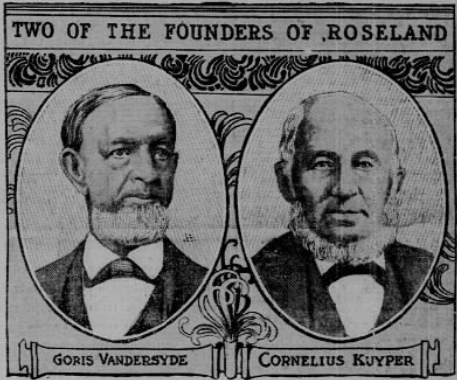
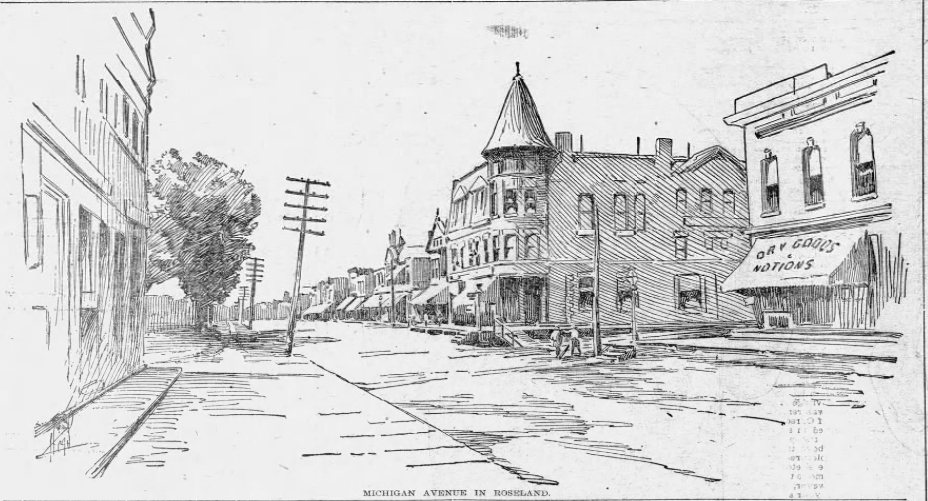
When the Dutch settlers first arrived, the area was known as High Prairie — higher, drier land compared to the swampy “Low Prairie” along the Little Calumet River to the south. According to the March 4, 1900 Chicago Tribune article “How Chicago’s Suburbs Were Planted and Named,” Cornelius Kuyper was one of the very first to build on High Prairie. He constructed the first brick house in the area at what is now 103rd Street and Michigan Avenue. That house also served as the first store in the settlement.
Right next door to him settled Gorus Vanderside. The newspaper notes that after Kuyper built his brick home, Vanderside moved in beside him, helping establish the early community.
John Ton, another of the original nine Dutch settlers, initially farmed farther south on land owned by the Dalton brothers near the Little Calumet River. Over time, he too became deeply connected to the Roseland area.
Why “Roseland”?
The land was originally called High Prairie, but as the Chicago Tribune explained in 1900, a real estate agent working to sell lots and houses near the new Pullman factory didn’t like the plain name. He came up with “Roseland” because it sounded beautiful and attractive to potential buyers. The name stuck, and by the turn of the century, the community proudly called itself Roseland.
Cornelius Kuyper: Storekeeper, Constable, and Underground Railroad Helper
Kuyper quickly became a central figure. He:
- Ran the first general store (out of his own home)
- Served as township constable
- Opened his brick house as a station on the Underground Railroad
Together with John Ton, he helped hide freedom seekers escaping slavery and moved them northward toward safety, often in the direction of Holland, Michigan.
John Ton: Fellow Pioneer and Freedom Fighter
John Ton is consistently named alongside Kuyper in the old newspapers as one of the founders of Roseland. Later in life (around 1893), he built a handsome Dutch Victorian home at 316 West 103rd Street.
Their Legacy in the Newspapers
The late 19th and early 20th century Chicago papers celebrated these Dutch pioneers:
- The Chicago Chronicle (Dec. 22, 1895) ran a feature on “Worthy Dutch Citizens” with group sketches and portraits.
- Another Chronicle piece (March 14, 1897) highlighted the Dutch community’s growth, homes, and businesses.
- The Chicago Tribune (March 4, 1900) gave detailed profiles and portraits of Kuyper, Ton, and others, preserving their stories for future generations.
These articles show that Kuyper and Ton were not just farmers — they were community builders, merchants, and quiet heroes of the abolitionist movement.
Why This History Matters Today
Roseland’s story is Chicago’s story: Dutch immigrants working alongside others to shape a new community, while also playing a role in one of America’s most important moral struggles — the fight against slavery.
Many people today have never heard these names. That’s why videos and articles like this one are so important.
Cornelius Kuyper and John Ton helped plant the seeds — literally and figuratively — for what became Roseland. Their brick houses, their stores, their courage on the Underground Railroad, and their role in naming and growing the neighborhood deserve to be remembered.
Sources & Images
- Chicago Tribune, March 4, 1900 (“How Chicago’s Suburbs Were Planted and Named” and “Two of the Founders of Roseland”)
- Chicago Chronicle, Dec. 22, 1895 and March 14, 1897
- Chicago Public Library Calumet Region Community Collection

 The Essence of Chicagoland Areas